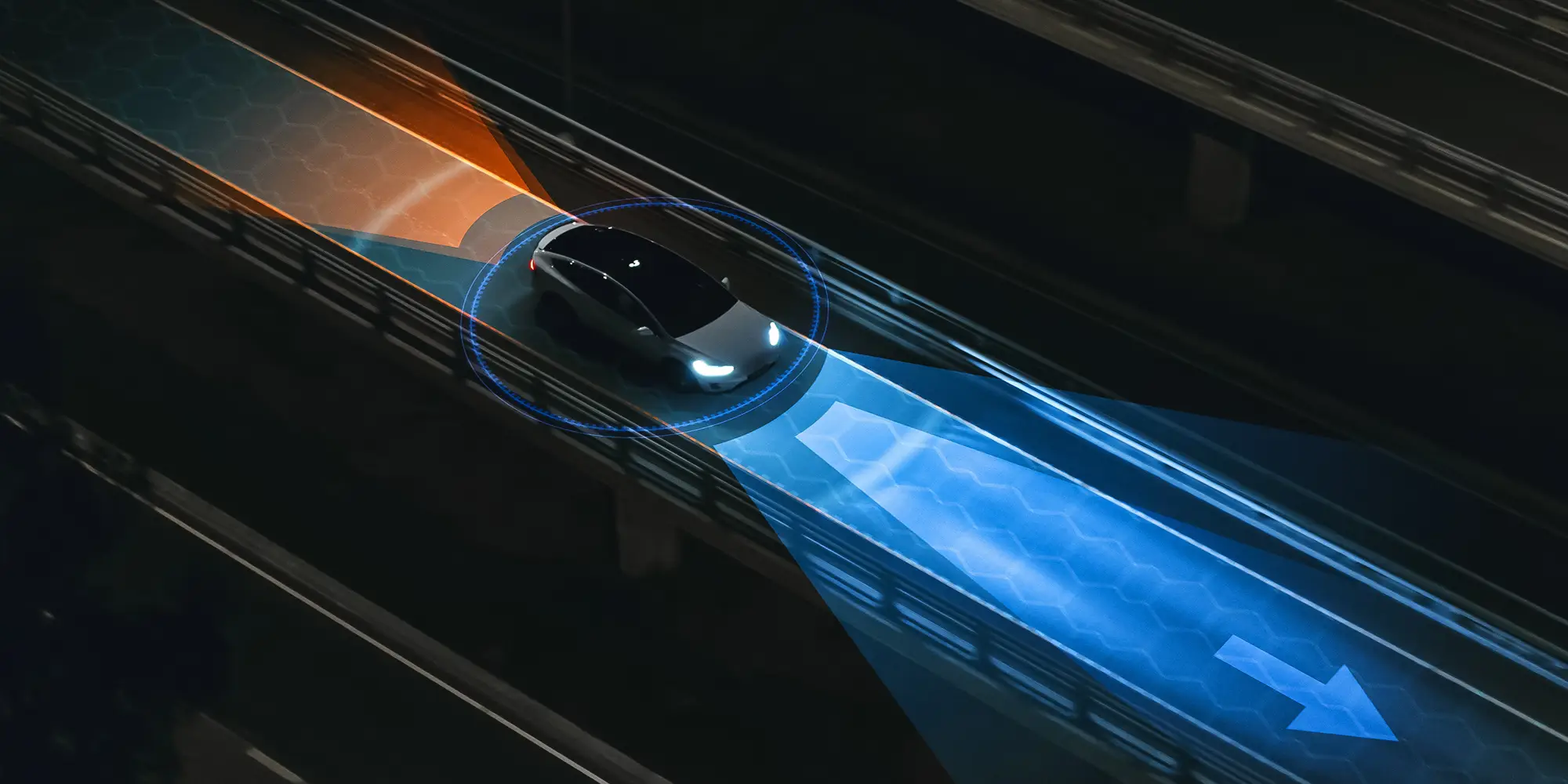

Autonomous vehicles (AV) are about to become mainstream as fleets expand from controlled test tracks to city-wide operations. But first, Omar Zoubi, DVP of Global AV Operations at TaskUs, explains during a deep-dive conversation on The Driverless Digest podcast, solving edge cases is critical to becoming road ready.
Unpredictable moments, like a construction worker using hand signals or a sudden power outage, can cause even the most advanced machine to stall. Host Harry Campbell says, “It’s really cool to see how fast things are moving. However, for this reality to scale, safety cannot be a byproduct — it must be the foundation.”
Who’s really driving AV safety?
What happens when an AV encounters an unfamiliar scenario? The system requests real-time context from a remote specialist. These human teams are critical — not for actually driving the vehicle, but for providing the logic needed to navigate complex “edge cases.”
In short, the AI remains in full control of the driving execution, while the human validates environmental changes or unexpected scenarios to give the vehicle the context it needs to move safely and precisely.
“This technology doesn’t sleep. It doesn’t get distracted. It doesn’t get drunk,” Omar notes. “But bringing in a human to validate context gives the public confidence that the vehicle is employing the right safety procedures.”
Harry agrees, “I think that’s one of the biggest things that people don’t realize. There is still that human element to it, and I think that’s actually a good thing for safety.” This partnership ensures that a single confusing intersection doesn’t paralyze an entire fleet or compromise passenger safety.
Safety is a shared objective
In the current model, humans handle high-frequency tasks like mapping, labeling and frequent remote guidance. But as autonomous technology learns and improves, this human safety framework will evolve alongside it.
When Harry asks, “How do you actually scale this and make it a profitable business?” Omar describes a future state where AI becomes resilient enough that human specialists shift their focus exclusively to edge cases — the “less than 1%” of highly complex, unpredictable incidents.
By outsourcing these specialized operations, AV companies can scale across new cities without the massive overhead of building internal safety teams from scratch.
This collaborative, external approach also reinforces a shared mission. “Safety is the one area that every single industry leader is very public about sharing to make sure the entire industry elevates that part of it,” Omar says.
Harry agrees: “If one company has an accident, it’s bad for the whole industry. But if one company is safe, it helps everyone.”
Building a foundation of trust
This industry-wide commitment to safety ultimately relies on how the technology handles the unpredictable reality of the road. Because an AV system is designed to constantly learn, outsourced human operators act as the system’s real-time safety net. Every time a human steps in to resolve a complex edge case, that specific interaction is codified, teaching the AI how to navigate the scenario independently next time.
As the industry approaches true scale in the coming years, the benchmark for success will shift from total miles driven to the proven resilience of the safety ecosystems supporting them.
“Our biggest priority is providing an AV service that puts safety first—that is the only way to push this technology beyond its current limits,” Omar says. “By combining talent, technology, and a specialized ecosystem, we can create a recipe for success that ensures every deployment is built on a foundation of safety.”


