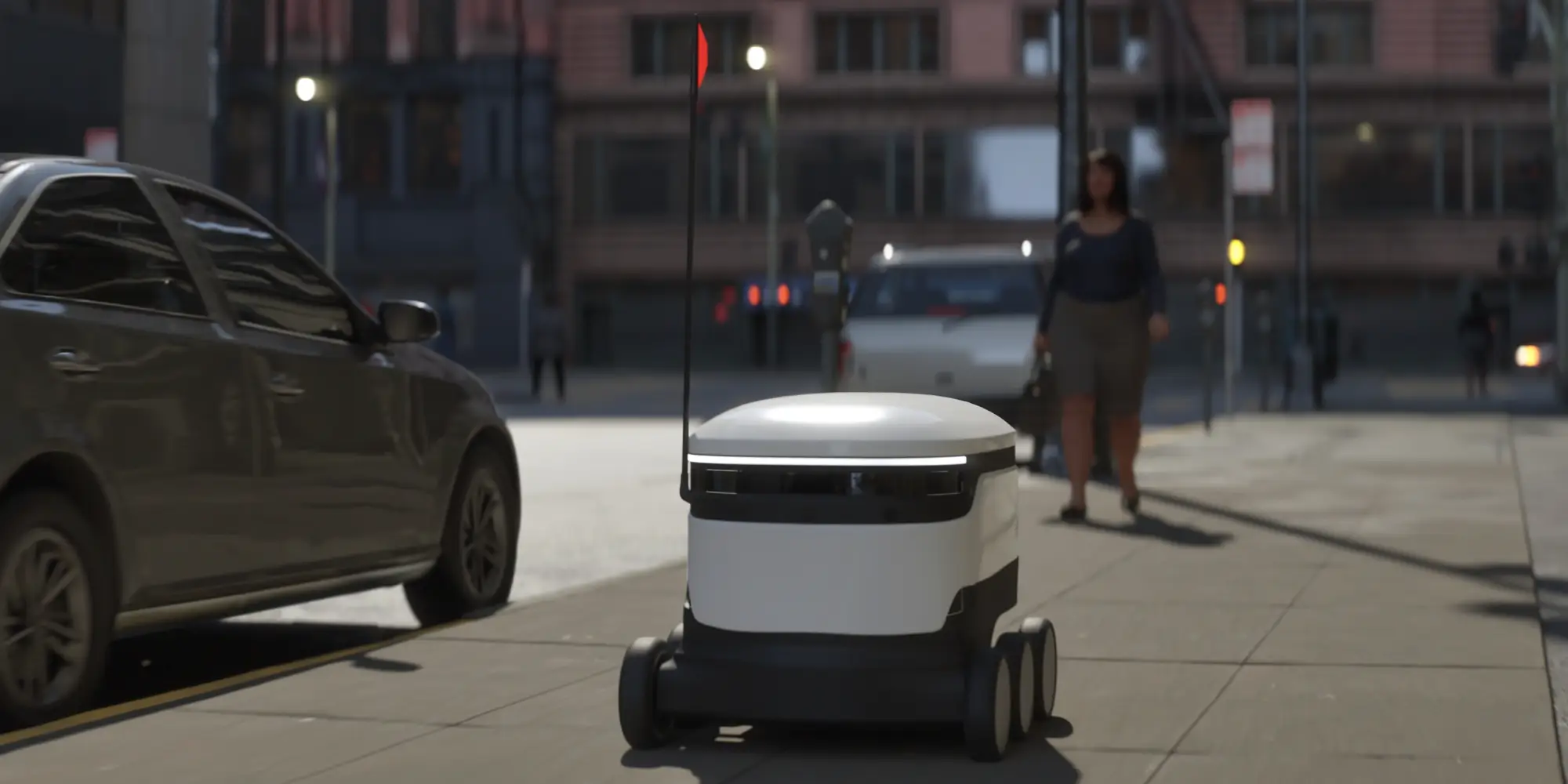
Urban sidewalks can be more like obstacle courses than clear routes for robot deliveries. Machines can easily navigate predictable, pre-mapped paths, but freeze when they encounter the unexpected. To safely move forward, a human operator needs to step in.
The top delivery robotics company knows that every second counts and has made remote supervision a critical part of their operations. Cold or missing food makes for unhappy customers, and a robot blocking a busy public space is both a safety hazard and risk to
brand reputation.
The challenge
Ensuring fleet reliability and robot safety
To keep up with booming demand, the company needed to expand and strengthen its remote pilot operations. An existing partnership was failing due to workforce management issues. Chronic absenteeism, poor attendance and high work avoidance impacted service and created a domino effect for the business:
- Fewer robots running: Low staffing meant fewer supervisors were available to monitor
the fleet.
- Longer wait times: Robots sat idle at intersections waiting for a human to take over, causing delivery windows to slip.
- Market perception: Stalled robots and late deliveries threatened trust and made a bad impression on consumers and regulators.
A lack of formalized, scalable training programs compounded the challenge. New hires studied dense engineering manuals written by and for the developers who built the system. These materials were overly technical and void of operational context, making it impossible to onboard talent effectively.
The solution
Rebuilding remote operations from the ground up
Recognizing that poor execution was stalling its growth, the company turned to TaskUs. The goal was to stabilize the remote pilot program, redesign the entire workflow and build a strong management structure to meet the unique demands of autonomous delivery across six distinct U.S. markets.
Optimizing team training
We started by closing the knowledge gap. Our learning experts completely rewrote the training curriculum, stripping away technical jargon and turning complex engineering guides into simple, bite-sized modules.
New training materials and videos focused on real U.S. roads, local traffic rules and navigation. This allowed remote pilots — regardless of where they were located — to easily visualize the exact streets robots were navigating. The new approach worked so well that the client adopted it as the standard for its entire partner network.
Finding the right operations talent
Next, we fixed the hiring profile. At first, video gamers seemed like the perfect fit because of their natural comfort with multi-screen setups, fast response times and controller interfaces. But virtual environments don’t fully represent the real world.
We shifted the recruitment focus to hire individuals with significant driving experience. This single pivot made an immediate difference. Candidates had an innate understanding of traffic flow, defensive driving principles and spatial awareness — all of which are core to safety.
To keep productivity high and ensure constant coverage, we added hands-on leaders on the floor. They monitored pilot activity in real time and used daily check-ins to keep team morale and engagement high.
Remote piloting requires intense, uninterrupted focus, so we developed a specialized quality assurance rubric. This tool tracked performance metrics and actively monitored for early signs of mental exhaustion. Data allows managers to step in early, rotate staff and prevent burnout before it could ever impact performance or safety.
Results
Higher eSAT, faster and safer delivery
Fixing the remote pilot program brought immediate improvements to speed, safety and
team reliability.
The new training program achieved 94% completion throughput, creating a steady pipeline of job-ready remote supervisors to support the company’s expansion. On the floor, the combination of hands-on leadership and proactive fatigue tracking led to an 89% employee satisfaction score (eSAT). A new workplace culture exceeded goals for attendance, resulting in a 95% on-duty average vs. the 87.5% target.
With a fully staffed, highly engaged team, the client cut more than 4 minutes off late deliveries and boosted robot travel speed by 6% month-over-month. Most importantly, the team maintained a perfect 0% accident rate even as the robots moved faster.
Blown away by this turnaround, the client expanded our partnership. Today, TaskUs teams label and annotate the live video data captured by the robots during runs. This data fuels the machine learning loop, helping train and improve the client’s core AI systems over time.