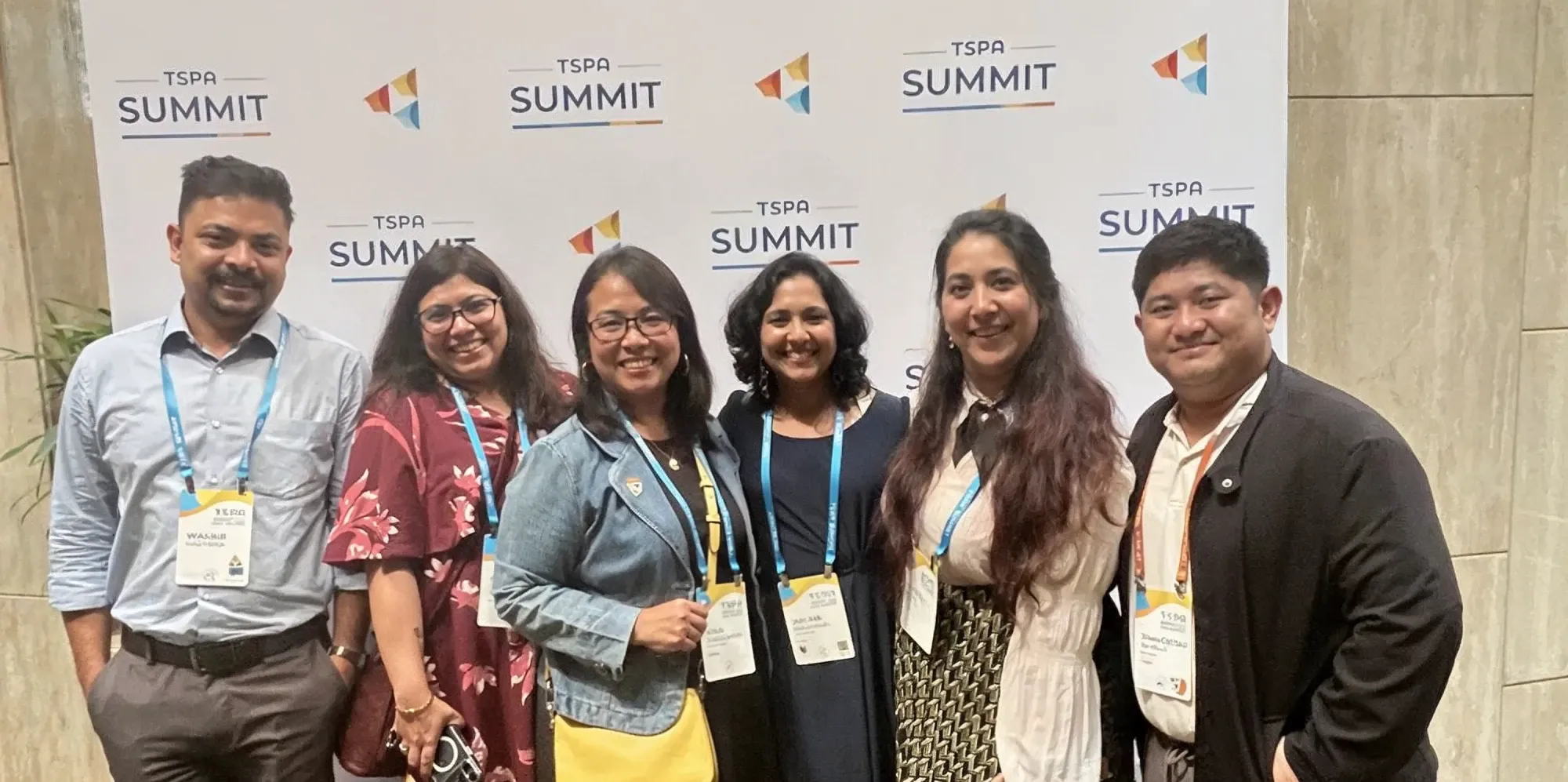

The TSPA APAC Summit 2025 affirmed that a one-size-fits-all approach to digital safety is obsolete. The region’s immense cultural, linguistic and regulatory diversity demands a localized strategy.
“The APAC region offers a distinct ‘Asian view’ that can inform global policy through contextual nuance, multilingual understanding and cultural sensitivity,” says Sonali Sardana, Director, Wellness & Resiliency, TaskUs.
She and other TaskUs experts were in Singapore to lead and engage in important discussions about the evolving landscape.
Here are the five themes that stood out to them.
1. Child safety and tech-facilitated exploitation
“GenAI is creating a new wave of child safety risks,” according to Wasbir Hazarika, TaskUs’ Trust & Safety Practice Lead. In his panel, “Protecting Children in the AI Era,” he and other speakers examined how bad actors use AI tools to create deepfakes for sextortion schemes.
Beyond AI, online platforms are becoming a fertile ground for non-consensual intimate imagery (NCII), child sexual abuse material (CSAM) and cross-border child trafficking. Sonali points out that some organizations exploit digital content to profit from children, sometimes through orchestrated “orphanage trafficking” under the guise of fundraising.
Effective child protection requires moving beyond content legality to focus on the guiding principles that capture the nature of the abuse. “Strengthen content-vetting pipelines, NGO partnerships and escalation frameworks to identify and intervene in exploitative livestreams or fundraising patterns,” says Sonali.
2. AI-driven harm is multifaceted
AI threats go beyond child safety. GenAI and deepfake technology are fueling a surge in digital sex crimes, tech-facilitated gender-based violence, hate speech, doxxing and “nudification” apps.
“Effective mitigation requires a combination of proactive platform features like nudity protection feature in direct messages, strong cross-stakeholder collaboration and support from legislative efforts like the TAKE IT DOWN Act,” according to JC De Villa, Research Analyst, Wellness & Resiliency, TaskUs.
Crucially, the summit stressed the risk of language and cultural bias in AI. Models trained on translated data can amplify cultural biases that can unintentionally enforce or amplify certain points of view, often by exploiting human emotions.
To ensure safety, evaluating AI trustworthiness before deployment is necessary. That requires multistage validation and stringent red teaming exercises.
3. Hyper-local context is mandatory
Because of APAC’s immense cultural and linguistic diversity, Western-centric safety models are failing. “The complexity of these issues is heightened by the lack of cultural understanding,” says Aruna Balammal, Senior Behavioral Scientist, Wellness & Resiliency, TaskUs. That creates major blind spots in moderation.
To address trust and safety challenges in APAC, speakers suggest investing in region-specific data, requiring regulators to push for multilingual AI standards and implementing human-in-the-loop QA with local experts. Human evaluation becomes more important in culturally sensitive contexts where algorithmic audits fail to detect latent harm.
4. Geopolitics and stakeholder POV add further complexity
The increasingly fragmented and high-pressure regulatory environment makes cross-border trust and safety operations more challenging. Better region-specific crisis management frameworks that can navigate fast-moving events across multiple languages and legal systems help improve alignment and efficiency.
Aruna points out another challenge: the very concept of “safety” depends on the stakeholder defining it:
- Parents and educators measure safety by the prevalence of harm exposure.
- NGOs measure safety by the equitable impact and consistency of enforcement across all languages.
- Regulators measure safety by compliance and systemic risk.
- Platforms are focused on operational scale, efficiency and metrics like time to action.
This fragmentation requires transparency, not just for corporate compliance, but to help users navigate the risks.
5. Frontline wellness sustains safety
Navigating a complex web of challenges and changes puts immense pressure on trust & safety teams. Vina Paglicawan, Senior Director, Wellness & Resiliency, TaskUs, notes, “Continuously improving and evolving well-being programs is important to effectively support the workforce who are directly exposed to human distress and conflict.”
Again, cultural context is vital here. Western-imported wellness models often fail in APAC due to differing stigma and help-seeking norms. To mitigate, develop a regional wellness index tailored to local norms and institutionalize peer-support models. Providing clinical supervision and making leaders accountable for their teams’ health matters too.
To gauge program efficacy, organizations must look past “happy sheet” metrics and instead measure the impact of absenteeism, resilience indices and qualitative feedback.
Looking ahead
APAC is made up of many unique markets, so trust & safety solutions must be adapted, not copy‑pasted.
Collaboration was also a running theme throughout the discussions. “Solving complex issues requires collaboration, as no group can manage existing and emerging challenges in isolation,” JC says.
Our team would like to hear about your goals and share best practices to fortify and localize your approach to digital safety.


