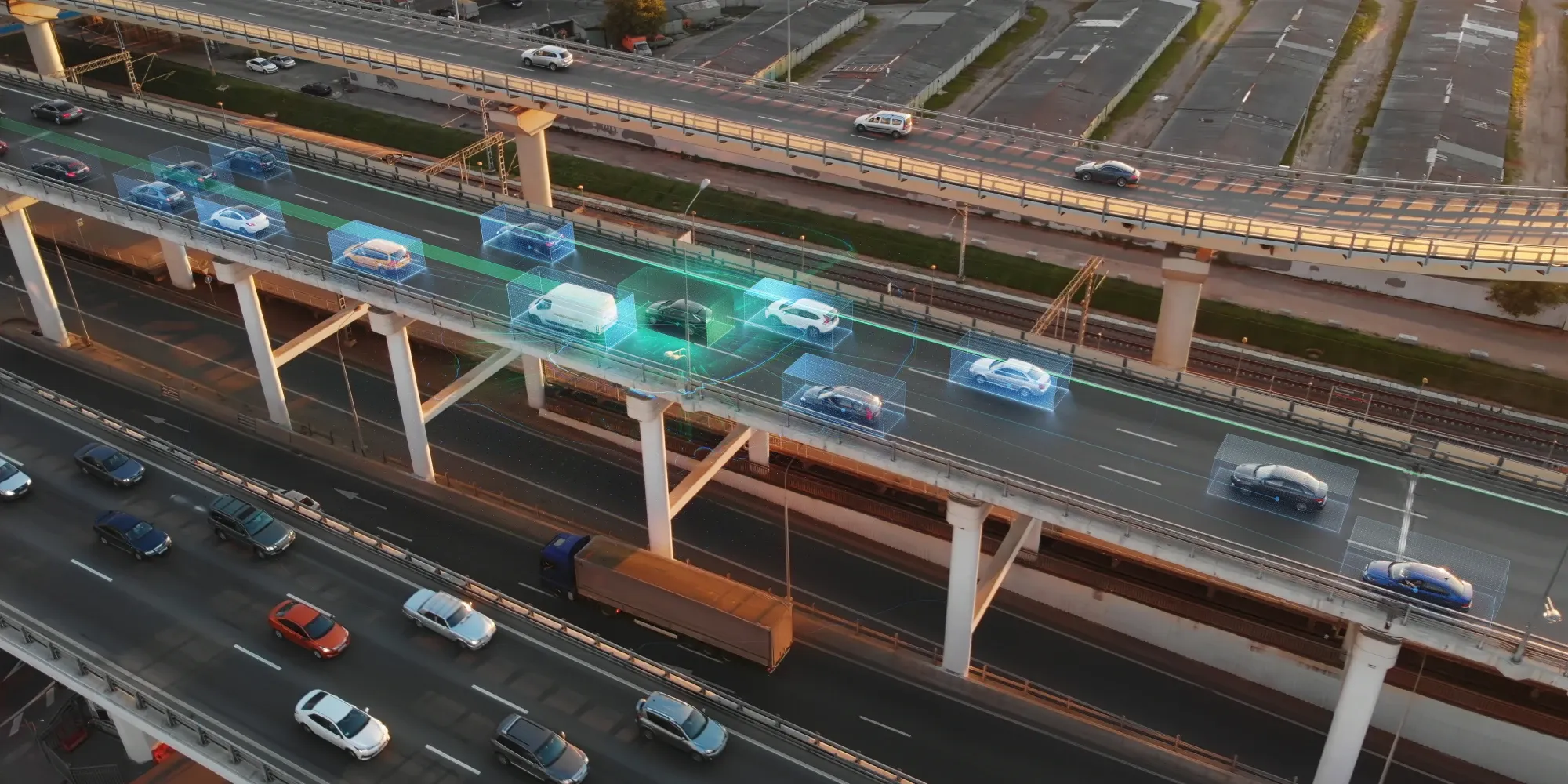
Autonomous technology is finally moving from experimentation to real-world deployment. Machine vision and decision making have advanced to the point where vehicles and robots can navigate and handle dense, unpredictable city environments. Now, a new barrier to implementation is emerging.
“Autonomy is only as scalable and reliable as the human-in-the-loop (HITL) architecture behind it,” explains Wasbir Hazarika, Trust & Safety Practice Lead, TaskUs. “Historically, autonomous vehicle (AV) safety has been treated as a series of silos. To move at the speed of AI, you need a unified approach powered by people.”
The unified autonomy cycle
Fragmentation occurs when the foundational work, like high-precision data labeling and remote operations aren’t managed as one.
Wasbir explains, “A unified autonomy cycle eliminates the friction between digital commands and physical reality.”
The cycle involves a stack of technology and humans, from end-to-end.
- R&D and engineering operations lay the foundation through high-precision data labeling and context mapping, teaching the vehicle to interpret its environment accurately, distinguishing between pedestrians, cyclists and stationary objects.
- Remote assistance is the vehicle’s digital lifeline. Operators use real-time camera feeds to provide “contextual reasoning” for the AI when it encounters unrecognized obstacles.
- AV field operations is a specialized rescue team dispatched when digital commands fail. They are hardware troubleshooters who re-engage vehicles and manage complex issues.
- Depot operations is the logistical heart where fleets are charged, calibrated and parked.
- Emergency response is the high-stakes end of the spectrum, requiring a 911-dispatch mindset to handle physical security incidents and collisions with split-second accuracy.
Enabling rapid market mobilization
In such a fast-growing space, expansion depends on speed as well. To enter a new market successfully, you need specialized driving and operations teams who bring established technical and regional expertise to the first mile of a launch. Having this existing human engine avoids months of local recruiting and sourcing to fill skills and knowledge gaps.
Every new geography brings a unique web of complex licensing requirements and evolving standards. What works in the US will not meet the regulatory thresholds in Japan or Europe, for example. Local nuance is a critical safety feature.
Accuracy and compliance call for:
- Regulatory expertise: Managing the complexities of state-issued endorsements and market-specific certifications required to operate AV technology
- Awareness of evolving standards: Adapting the human-in-the-loop workflows in real-time, ensuring the platform remains compliant across different jurisdictions
- Ability for hyper-localized training: Training modules to account for regional road rules, signage nuances and cultural driving behaviors
All told, this approach ensures a team is native to the new market before the first vehicle hits the road.
Building the right team for the right place
Knowing how to scale is the start. How you build the right team who’s ready for the right place takes a new caliber of recruitment. Scaling problems often stem from a talent mismatch, which can also cause risk. To close the safety gap, the industry is moving beyond traditional driver profiles toward tech-savvy responders.
“We need individuals with the technical intuition of an IT professional and the steady hand of an emergency dispatcher,” Wasbir explains. “Every operator must function as a seamless extension of the vehicle’s own safety system.”
To ensure quality at scale, candidates should undergo a multi-layered assessment.
- Cognitive fit: Benchmarking communication skills for high-stakes workflows
- Technical literacy: Testing the ability to identify hardware ports and interpret road signs through vehicle optics
- Resiliency screening: Filtering for the ability to maintain peak performance during high-stress or low-stimulus environments
Setting these high barriers to entry overcomes the industry’s “quality at scale” problem.
Adding a wellness guardrail
In any industry, ensuring the well-being of the frontline should always be a priority. But it’s especially critical in the autonomous space. The silent nature of the work creates cognitive fatigue and causes risk. For example, watching a screen for hours can lead to boredom-induced errors, and responding to collision data takes an emotional toll.
AI is one way to help mitigate these issues, monitoring for signs of exhaustion and triggering interventions and preventing a safety incident.
“At TaskUs, we see wellness as an advantage,” says Wasbir. “Protecting the people doing the work is also how we protect the fleet.”
Driving the industry forward
Safety and scale in the age of autonomy is a cycle, not a destination. As the industry moves toward a reality of millions of driverless rides per week, the human stack is a critical process layer.
By unifying labeling, recruitment and specialized training, TaskUs provides the technical foundation and people-powered support that will allow autonomous systems to become mainstream without compromise.
Our capabilities
TaskUs provides the end-to-end infrastructure and human engine you need to scale autonomous platforms safely:
- High-precision data labeling
- Real-time remote assistance
- Global regulatory & compliance management
- Specialized hardware & field operations
- Technical recruitment
- Science-based Wellness & Resiliency programs
Get in touch with our experts.


