An AI companion is built to play the role of a friend, confidant or romantic partner. By offering 24/7 availability with zero fear of rejection, these chatbots can easily hook users. Intellectually, people know they’re talking to software, but getting emotionally attached is human nature.
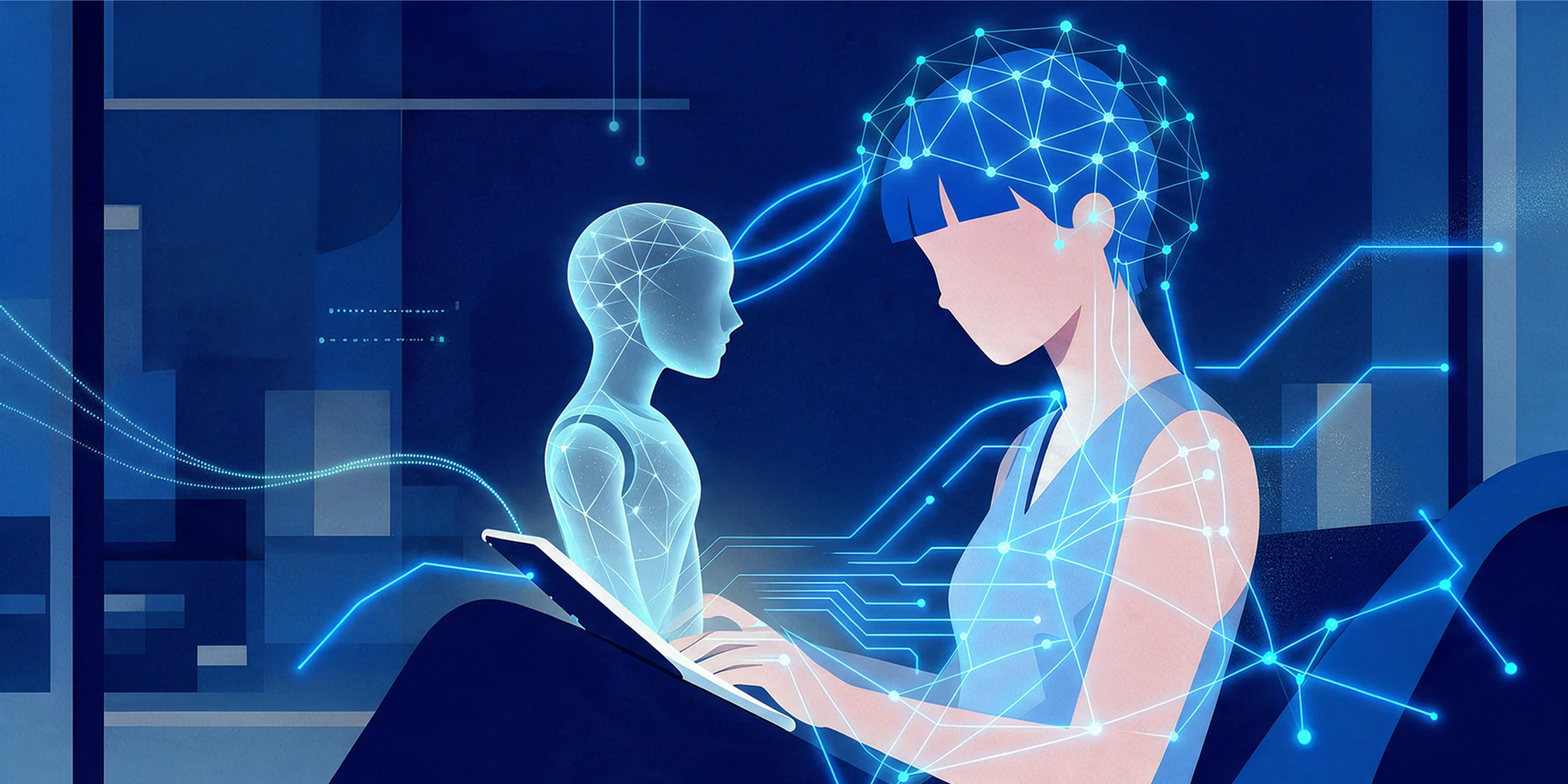
“Our brains are biologically wired to seek connection,” explains Sarah Edwards, Director of Clinical Intelligence & Responsible Tech for AI Services at TaskUs, in a whitepaper. “This means synthetic interactions can register as genuine connections, regardless of what the user logically knows about the agent it interacts with.”
As companies race to build tools that capitalize on deep biological responses, Sarah points out that few have established the clinical frameworks needed to handle the fallout. But when a product is engineered to feel human, code changes carry real psychological consequences, exposing both users and organizations to real risk.
AI attachment: The science behind synthetic relationships
Human connection rests on familiar cues: a warm tone, quick responses, active listening and the feeling of truly being heard. Conversational AI copies those exact signals to construct the illusion of intimacy.
“AI that provides endless empathy, validation and availability taps right into our biological drive for connection,” says Sarah.
This comes down to how the brain fundamentally works. The prefrontal cortex (the brain’s logical hub) intellectually recognizes the system is just code, while the limbic system (which processes emotions) registers the interaction as genuine care. Since the prefrontal cortex isn’t fully developed until the mid-twenties, younger users are left particularly vulnerable, lacking the mental filter needed to recognize artificial cues.
The impact of losing of AI companions
Real emotional attachment means that when an AI companion goes offline, the resulting distress is genuine. This digital loss may be a modern problem, but the clinical framework for understanding it is not. Sarah explains, “When society dismisses the pain of losing a digital companion as an illusion, users can experience disenfranchised grief — a legitimate loss that goes unvalidated and unmourned.”
AI companies can no longer dismiss the psychological consequences of unmanaged user reliance,” she says. “What began as a clinical concern is rapidly becoming a regulatory baseline.”
In response to these vulnerabilities, many U.S. States have passed companion chatbot regulations in the last year alone. New York, California and Tennessee mandated transparent AI disclosures and integrated crisis interventions. Washington, Nebraska, Idaho and Oregon are slated to implement their own regulatory frameworks in 2027.
“When an app is designed to feel empathetic, people naturally let their guard down,” says Sarah. “If the feature is suddenly changed or shut down, users are left to deal with real heartbreak, but without corresponding warning or support.”
Defining an emotional safety framework for AI
To protect users from psychological reliance on AI, platforms need to embed emotional safety across the entire product lifecycle and user relationship.
“While traditional trust & safety centers on content moderation, the AI era calls for a broader paradigm: lifecycle emotional safety,” Sarah explains. “This framework requires product and safety teams to manage the emotional footprint of their tool across three phases.”
During early design, developers can program friction points into the AI to mitigate the volume of signals that contribute to synthetic attachment. During daily use, platforms need to monitor for signs of isolation, adjust the AI’s tone, and steer users back toward human connection. And when a service undergoes maintenance or shuts down entirely, platforms need clinical off-boarding protocols to cushion the blow and prevent acute psychological distress.
Operationalizing clinical intelligence in AI systems
Ultimately, the right balance of expertise at the product table results in safer, more sustainable models. Engineering builds for performance and scale, legal teams protect against liability and regulatory risk, while integrating clinical expertise directly into product design allows platforms to mitigate unhealthy attachment from the start.
“Treating behavioral health interventions as a reactive patch after a crisis occurs is a structural failure,” explains Sarah. “Clinicians bring specialized knowledge in relational boundaries and disengagement practices to help ensure system architecture accounts for human psychology long before deployment.”
A new benchmark for AI product safety
The AI industry is reaching a critical turning point. As baseline features like content filtering and data security become standard expectations, relational integrity is emerging as a true benchmark of AI product quality.
Unmanaged emotional reliance and abrupt service changes are drawing increased attention from consumer protection bodies, elevating brand risk and potential legal exposure for companies that treat offboarding as a technical detail.
According to Sarah, “Platforms that proactively embed clinical safeguards into their product architecture are much more likely to clear regulatory hurdles and earn lasting user trust.”
Get her full perspective on the “lifecycle emotional safety” framework by downloading the white paper.


